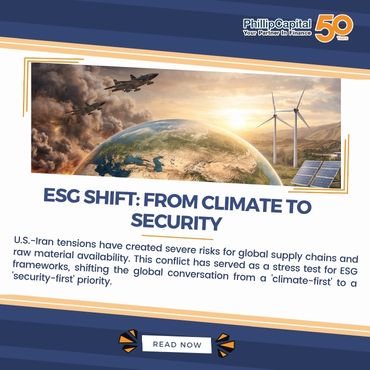
U.S.-Iran tensions have created severe risks for global supply chains and raw material availability. The Strait of Hormuz remains the primary bottleneck; as a critical corridor for global energy and industrial gases, any disruption here creates immediate ripple effects across manufacturing sectors that lack viable alternatives for these resources.
This conflict has served as a stress test for ESG frameworks, shifting the global conversation from a “climate-first” to a “security-first” priority. This evolution forces a reassessment of corporate governance to include energy resilience and geopolitical risk as essential variables for maintaining long-term industrial stability.
To mitigate these risks, companies are diversifying supply chains to reduce Middle Eastern dependence while increasing stockpiles of critical materials. Simultaneously, the U.S, EU, and major Asian economies are investing heavily in domestic production to ensure industrial sovereignty against global disruptions.
For example, the semiconductor industry is particularly exposed due to its reliance on Qatari helium, which accounts for one-third of global production. If the Strait of Hormuz were closed, 25% of the world’s helium supply would vanish, potentially halting global chip manufacturing and highlighting the extreme fragility of high-tech logistics.
In addition, geopolitical fears have sent oil prices swinging between $90 and $120 a barrel, triggering significant instability in global stock markets. This volatility is accelerating the transition to renewable energy, which is now being viewed as a vital domestic security tool to insulate national economies from foreign supply shocks.
The Era of Energy Shocks
Following the 2015 Paris Agreement, the global energy debate shifted decisively toward prioritizing climate goals over low-cost fossil fuels. This sparked a massive wave of renewable energy investment while leading to a significant pullback in spending on oil, gas, and coal.
The 2022 invasion of Ukraine served as a brutal wake-up call, exposing Europe’s heavy reliance on Russian gas as a critical vulnerability. As supplies collapsed and prices soared, the resulting global inflation forced governments worldwide into urgent action to secure their energy futures.
In response to this extreme volatility, nations from Europe to Asia fast-tracked solar and wind projects to insulate their economies. Simultaneously, many countries ramped up domestic production of traditional energy sources to ensure immediate stability and reduce dependence on high-risk imports
Through the lens of ESG
Through the lens of ESG analysis, instability in the Middle East and disruptions to global shipping routes present multifaceted challenges. Environmental risks arise from volatile energy markets and increased emissions, while social concerns focus on ethical sourcing and the societal impact of material shortages. Governance now requires a heavier emphasis on risk management and transparency to withstand sudden geopolitical shocks.
Notable examples such as the international expansion strategies of Intel and Taiwan semiconductor manufacturers demonstrate how companies can diversify production away from high-risk regions and strengthen supply chain stability and integrating ESG principles into their core strategies, these companies are strengthening their supply chains while ensuring more responsible, sustainable growth.
Governments, particularly in vulnerable economies, are increasingly prioritizing domestic energy sourcing whether through fossil fuels or renewables to ensure national security. This urgent push for a rapid global transition toward more diversified and resilient energy systems.
In Malaysia, this shift underscores the need to accelerate the National Energy Transition Roadmap (NETR). By prioritizing solar and hydropower, the country can reduce its heavy reliance on fossil fuels, simultaneously lowering its carbon footprint and significantly strengthening its domestic energy security.
Our View: The current conflict has forced a pivot from “climate-first” to “security-first” ESG, where supply chain survival and reshoring have become the primary drivers of governance. Renewable energy is no longer just an environmental goal but a critical national defense tool used to decouple domestic economies from Middle Eastern volatility.
In regions like Malaysia and ASEAN, the impact is a double-edged sword: while high oil prices temporarily boost state revenues, they simultaneously trigger “cost-push” inflation and threaten to paralyze the key sectors. Ultimately, this crisis is the catalyst for a more fragmented but resilient global economy, where true stability is defined by energy independence and supply chain sovereignty.
We believe PMART/PMA Dividend Enhanced and/or PMART/PMA Dividend Enhanced ESG may offer a defensive positioning during periods of uncertainty, given their exposure to high dividend-yielding equities with a strong domestic focus. We apply the Dog of the Dow approach, screen and select top market cap stocks to minimise risk and ensure consistent performance. The portfolio is an equal weighting portfolio which reduces concentration risk and provides similar exposure to all clients, both initially and after rebalancing. We offer both conventional and Shariah investment options to cater to the diverse needs of our investors. Click here to learn more. We recently also introduced PMART/PMA Dividend Enhanced ESG Mandate as we remain dedicated to investing in ESG stocks given their stronger valuation and profitability. Finally, Phillip Dividend Fund may also be a suitable consideration for investors seeking defensive return profile and stability during periods of market uncertainty.
Disclaimer
The information contained herein does not constitute an offer, invitation, or solicitation to invest in any product or service offered by Phillip Capital Management Sdn Bhd (“PCM”). No part of this document may be reproduced or circulated without prior written consent from PCM. This is not a unit trust or collective investment scheme and is not an obligation of, deposit in, or guaranteed by PCM. All investments carry risks, including the potential loss of principal.
Performance figures presented may reflect model portfolios and may differ from actual client accounts’ performance. Variations in individual clients’ portfolios against model portfolios and between one client’s portfolio to another can arise due to multiple factors, including (but not limited to) higher relative brokerage costs for smaller portfolios, timing of capital injections or withdrawals, timing of purchases and sales, and mandate change (e.g., Shariah vs. conventional). These differences may impact overall performance.
Past performance is not necessarily indicative of future returns. The value of investments may rise or fall, and returns are not guaranteed. PCM has not considered your investment objectives, financial situation, or particular needs. You are advised to consult a licensed financial adviser before making any investment decisions.
While all reasonable care has been taken to ensure the accuracy and completeness of the information contained herein, no representation or warranty is made, and no liability is accepted for any loss arising directly or indirectly from reliance on this material. This publication has not been reviewed by the Securities Commission Malaysia.