Why Has Gold Become Popular Recently?
Many countries have been gradually diversifying their reserves away from U.S. Treasuries and reducing reliance on the U.S. dollar. This trend accelerated after Russia’s invasion of Ukraine in early 2022, which led to sweeping sanctions and the freezing of Russian assets. The episode underscored the geopolitical risks of holding dollar-denominated reserves, prompting central banks to reassess their reserve strategies. At the same time, rising macroeconomic uncertainty has reinforced gold’s role as a reliable store of value.
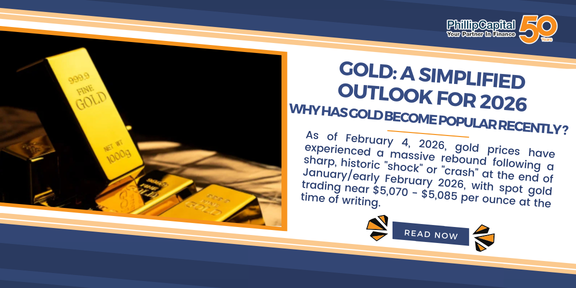
Against this backdrop, gold prices swung sharply in early February 2026. After reaching a record high above $5,580 per ounce, the metal suffered its steepest one-day decline in years, falling about 9%. The sell-off extended into early month of February, with prices sliding a further 3% to around $4,545 per ounce before stabilising. As of February 4, 2026, gold prices have experienced a massive rebound following a sharp, historic “shock” or “crash” at the end of January/early February 2026, with spot gold trading near $5,070 – $5,085 per ounce at the time of writing.
The abrupt reversal was driven largely by a shift in market sentiment following two key developments. Most notably, Donald Trump nominated Kevin Warsh to succeed Jerome Powell as chair of the US Federal Reserve. Warsh’s nomination pushed the US dollar higher, undercutting gold prices and reversing investor expectations that a Trump administration would tolerate a weaker currency.
Interest Rates, the U.S. Dollar, and Gold
Continuing from the first paragraph, expectations of lower U.S. interest rates have also placed pressure on the U.S. dollar. With Federal Reserve Chair Jerome Powell’s term ending in May, markets are questioning the future independence of the Fed. Historically, a weaker dollar tends to support higher gold prices.
As investors reduce exposure to U.S. assets, gold becomes increasingly attractive as an alternative store of value. Central banks remain consistent buyers, while institutional and retail investors continue to use gold as a hedge against economic and political uncertainty. This steady and diversified demand provides a strong foundation for gold prices moving forward.
Trump, Geopolitics, and Gold Performance
Gold prices surged sharply in April following President Trump’s announcement of “Liberation Day” tariffs on much of the world, which triggered significant uncertainty about the future of global trade. In addition, Trump has repeatedly pressured the Federal Reserve to cut interest rates to stimulate economic growth. Lower interest rates reduce the opportunity cost of holding gold, making it relatively more attractive.
Gold is priced globally in U.S. dollars, meaning currency movements have a direct impact on prices. When the dollar weakens, gold becomes cheaper for foreign buyers, increasing demand and pushing prices higher. Conversely, a stronger dollar tends to dampen international demand. This dynamic explains the long-standing inverse relationship between gold prices and the U.S. dollar.
Looking ahead to 2026, geopolitical tensions particularly between the U.S. and China are expected to persist but remain largely contained under a “managed friction” scenario. In this environment, demand for gold as a safe-haven asset should remain strong without causing severe or prolonged market disruption.
However, low-probability, high-impact “black swan” risks cannot be ignored. A potential escalation involving Iran in the Middle East or heightened tensions across the Taiwan Strait could rapidly destabilize global markets, undermine confidence in risk assets, and accelerate flows into safe havens. In such scenarios, gold would likely experience sharp upside moves, reinforcing its role as a crisis hedge. While gold prices are expected to trend higher over time, the path forward is unlikely to be smooth and may include sudden spikes driven by unexpected geopolitical events.
Ways to Invest in Gold
From an investment perspective, exposure to gold can be achieved in several ways.
First, investors can buy shares of gold mining companies or invest through specialist gold or mining funds. However, gold equities have significantly lagged the performance of physical gold over the past 20 years. This underperformance is largely due to rising energy, labor, and project costs, as well as poor capital allocation and management decisions. From the early 2000s through 2024, many miners struggled to translate higher gold prices into sustainable profits and shareholder value. Second, investors can hold physical gold, which directly tracks gold price movements without exposure to company-specific risks. Third, investors may invest in unit trust funds with gold exposure. While these provide convenience and diversification, they are subject to management-related fees, including management, audit, and trustee fees. Additionally, seasonal factors such as increased demand during Lunar New Year can provide periodic support for gold prices.
Why Diversification Matters
Diversification remains essential. For portfolios heavily weighted toward equities, property, or fixed deposits, adding gold can help balance overall risk. While short-term pullbacks are possible, long-term drivers such as sustained central-bank demand and a structurally weaker U.S. dollar continue to support higher gold prices.
In conclusion, gold should be viewed primarily as a portfolio diversifier rather than a source of alpha. Investors should also remember that gold is a non-yielding asset—its value lies in protection and stability, not income generation.
Disclaimer
The information contained herein does not constitute an offer, invitation, or solicitation to invest in any product or service offered by Phillip Capital Management Sdn Bhd (“PCM”). No part of this document may be reproduced or circulated without prior written consent from PCM. This is not a unit trust or collective investment scheme and is not an obligation of, deposit in, or guaranteed by PCM. All investments carry risks, including the potential loss of principal.
Performance figures presented may reflect model portfolios and may differ from actual client accounts’ performance. Variations in individual clients’ portfolios against model portfolios and between one client’s portfolio to another can arise due to multiple factors, including (but not limited to) higher relative brokerage costs for smaller portfolios, timing of capital injections or withdrawals, timing of purchases and sales, and mandate change (e.g., Shariah vs. conventional). These differences may impact overall performance.
Past performance is not necessarily indicative of future returns. The value of investments may rise or fall, and returns are not guaranteed. PCM has not considered your investment objectives, financial situation, or particular needs. You are advised to consult a licensed financial adviser before making any investment decisions.
While all reasonable care has been taken to ensure the accuracy and completeness of the information contained herein, no representation or warranty is made, and no liability is accepted for any loss arising directly or indirectly from reliance on this material. This publication has not been reviewed by the Securities Commission Malaysia.