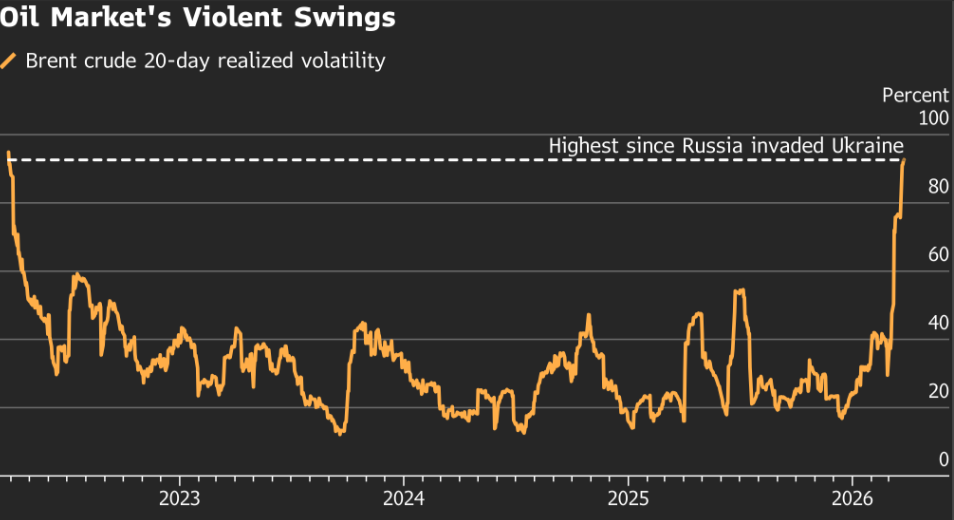
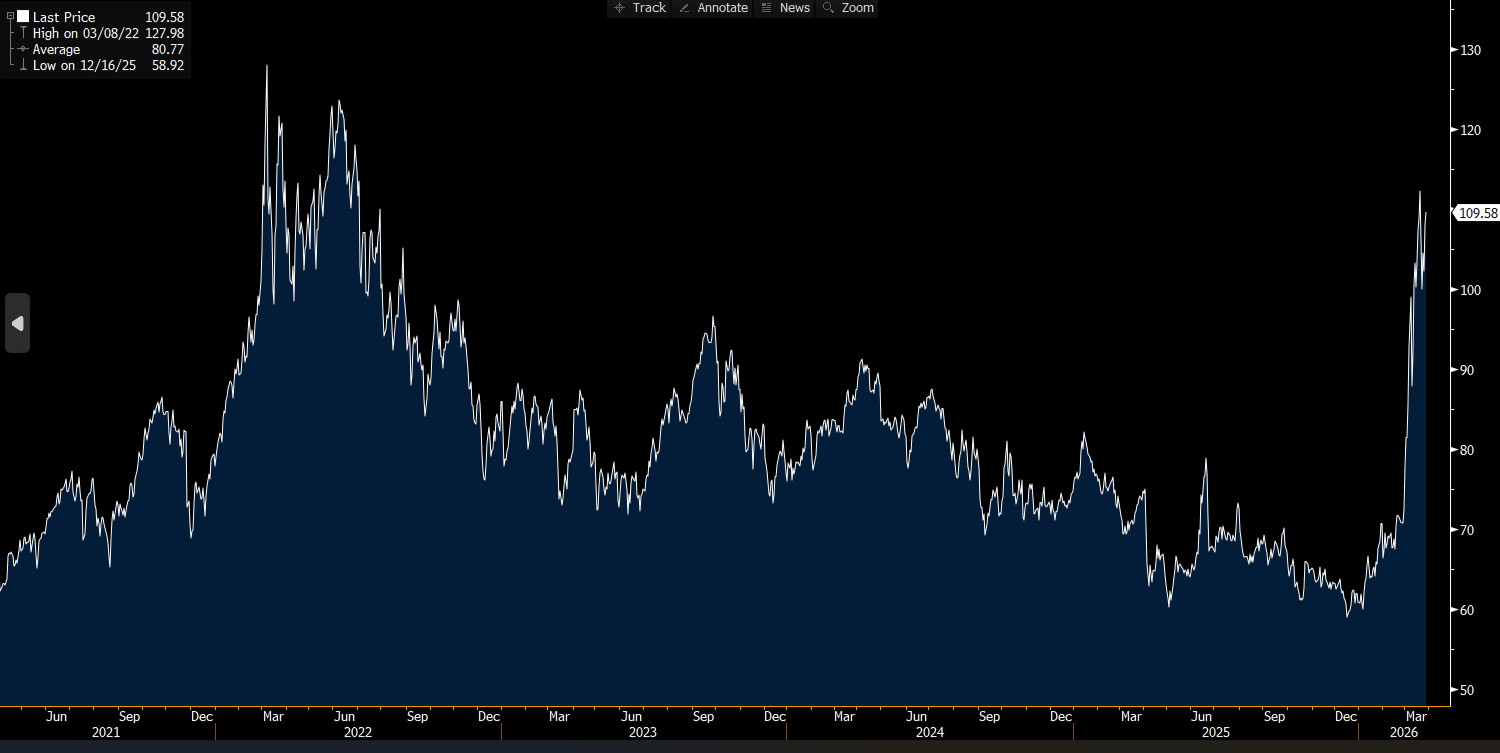
The recent escalation of tensions in the Middle East has triggered a sharp rise in global oil and gas prices. In late February 2026, coordinated military operations by the United States and Israel against Iran disrupted key infrastructure and heightened fears of supply instability. As a result, energy markets reacted quickly. By early March, Brent crude prices surged past $100 per barrel for the first time since 2022 (Exhibit 1), even reaching highs close to $119 as concerns grew over potential disruptions in the Strait of Hormuz.
This situation highlights a long-standing issue: the global economy remains highly vulnerable to oil price shocks and supply chain disruptions. Traditionally, governments have responded with subsidies, protectionist measures, or short-term fiscal support. However, these approaches are becoming less sustainable. Instead, the current crisis presents an opportunity to rethink energy strategies and accelerate the transition toward more resilient and sustainable systems.
Exhibit 1: Brent Crude Oil Prices Reached Their Highest Level Since June 2022
Source: Blomberg, PCM, 27 March 2026
Exhibit 2: Brent Crude Rose To Over $109 Per Barrel On 27 March 2026
Source: Blomberg, PCM, 27 March 2026
Malaysia’s Strategic Energy Leadership
Amid global uncertainty, Malaysia is taking a proactive and structured approach to energy transition. Rather than reacting to market shocks, the country is implementing long-term policies to strengthen its energy security. Central to this effort is the National Energy Transition Roadmap (NETR), which provides clear direction and confidence for investors and industry players.
The roadmap outlines specific targets for expanding renewable energy capacity. Malaysia aims to achieve 31% renewable energy by 2025, increase this to 40% by 2035, and reach 70% by 2050. These goals reflect a national commitment to achieving net-zero emissions as early as 2050. Moreover, by setting clear milestones, Malaysia is positioning itself as a regional leader in the green economy while creating new opportunities for growth and investment.
The Growing Role of Biofuels
At the same time, rising fossil fuel prices are making alternative energy sources more attractive. Biofuels, particularly biodiesel produced from palm oil, are becoming increasingly competitive compared to conventional diesel.
As crude oil prices climb, biodiesel blends become more economically viable. This shift encourages both governments and producers to expand their use. Consequently, demand for palm oil has increased significantly, pushing prices higher and outperforming other vegetable oils. In addition, countries like Indonesia are considering stronger biodiesel mandates, such as the accelerated rollout of B50 blending, which could further boost demand.
Furthermore, higher transportation and energy costs are prompting buyers especially in Asia to secure vegetable oil supplies early for fuel production. This behavior is reinforcing upward price trends and strengthening the role of bio-based energy in the current market.
Diversifying the Energy Mix
While biofuels offer a short-term solution, the broader energy transition is also gaining momentum. Countries are investing more heavily in renewable energy sources like solar and wind to reduce dependence on fossil fuels. However, because these sources can be intermittent, there is also a growing need for stable and reliable power generation.
In response, Malaysia is exploring nuclear energy as part of its long-term strategy. By diversifying its energy mix, the country aims to ensure a stable electricity supply while protecting consumers from prolonged energy price volatility. This approach also supports its broader goal of achieving net-zero emissions.
Our View
We believe that the ongoing Middle East conflict has reinforced the urgency of transitioning to alternative energy. While the short-term impact includes rising oil prices and market uncertainty, it also creates momentum for long-term change.
Malaysia’s structured and forward-looking approach, particularly through the NETR, places it in a strong position to navigate these challenges. As global energy markets remain volatile, demand for alternative fuels especially biofuels are expected to stay strong. Ultimately, this period of uncertainty may serve as a turning point, accelerating the shift toward a more secure, sustainable, and diversified global energy system.
Disclaimer
The information contained herein does not constitute an offer, invitation, or solicitation to invest in any product or service offered by Phillip Capital Management Sdn Bhd (“PCM”). No part of this document may be reproduced or circulated without prior written consent from PCM. This is not a unit trust or collective investment scheme and is not an obligation of, deposit in, or guaranteed by PCM. All investments carry risks, including the potential loss of principal.
Performance figures presented may reflect model portfolios and may differ from actual client accounts’ performance. Variations in individual clients’ portfolios against model portfolios and between one client’s portfolio to another can arise due to multiple factors, including (but not limited to) higher relative brokerage costs for smaller portfolios, timing of capital injections or withdrawals, timing of purchases and sales, and mandate change (e.g., Shariah vs. conventional). These differences may impact overall performance.
Past performance is not necessarily indicative of future returns. The value of investments may rise or fall, and returns are not guaranteed. PCM has not considered your investment objectives, financial situation, or particular needs. You are advised to consult a licensed financial adviser before making any investment decisions.
While all reasonable care has been taken to ensure the accuracy and completeness of the information contained herein, no representation or warranty is made, and no liability is accepted for any loss arising directly or indirectly from reliance on this material. This publication has not been reviewed by the Securities Commission Malaysia.