ESG is often linked with recycling, tree planting, carbon pledges or sustainability reports. These efforts matter, but they do not fully explain why ESG matters to investors. A more practical way to assess ESG is to ask whether an environmental, social or governance issue affects a company’s cost, financing access, regulation or long-term competitiveness. Malaysia’s data centre boom gives a useful example of this shift because data centres support cloud computing, artificial intelligence, digital services and hyperscale technology infrastructure, while also requiring large amounts of electricity, stable grid access, cooling systems and water supply.
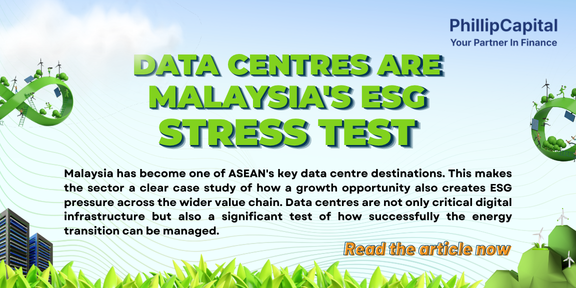
Malaysia has become one of ASEAN’s key data centre destinations, supported by demand from large technology companies, lower operating costs, available land, connectivity to Singapore and improving grid connection timelines. The opportunity extends beyond data centre owners. It also supports construction companies, mechanical and electrical contractors, cable suppliers, utilities, telecommunications providers and renewable energy developers. This makes the sector a clear case study of how a growth opportunity also creates ESG pressure across the wider value chain.
The key issue is power, but the ESG lens is broader than electricity alone. Environmentally, data centres raise questions on power generation, emissions, renewable energy supply, water use and cooling efficiency. Socially, large power and water users face closer scrutiny when resources are constrained. From a governance angle, operators and investors need to assess power sourcing, tariff exposure, approval risk and whether higher energy or infrastructure costs flow through to customers. This is where ESG becomes practical because the issue moves from sustainability language into real operating and financial constraints.
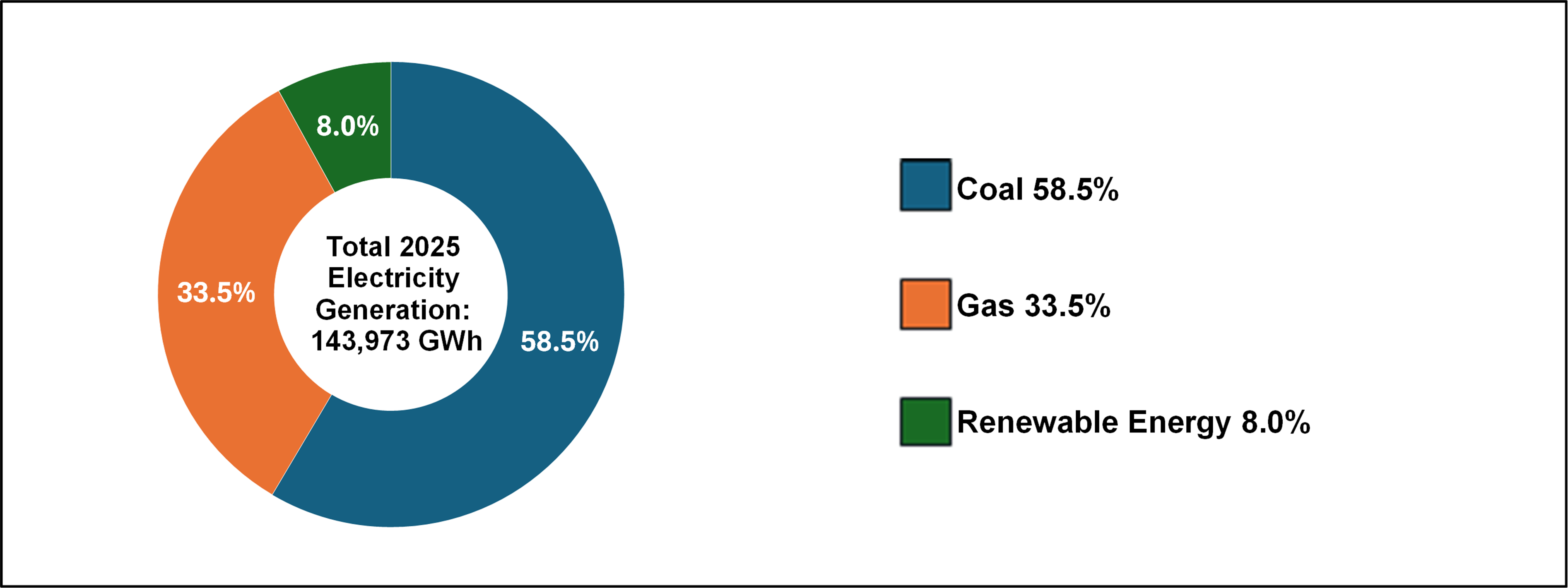
Exhibit 1: Malaysia’s 2025 Electricity Generation Mix
Source: Malaysia Energy Statistics, PCM, 16 June 2026
Exhibit 1 shows that coal and gas remained the dominant sources of Malaysia’s electricity generation in 2025, while renewable energy accounted for only 8% of total electricity generated. This is despite Malaysia exceeding its interim target of having renewable energy account for 31% of installed power capacity by end-2025. The difference comes from how the numbers are measured. Installed capacity refers to the power plants available in the system, while generation refers to the electricity actually produced. Renewable assets such as solar do not generate at full output throughout the day, which explains why the generation share is lower than the installed-capacity share.
This gap is important for data centres because operators increasingly require reliable and cleaner electricity supply. For global technology companies, access to renewable electricity supports sustainability targets and reduces exposure to future energy policy and cost changes. For Malaysia, the challenge is to attract digital infrastructure investment while keeping power supply stable, affordable and aligned with long-term energy goals. The pressure is not only environmental. It is also operational and financial, as data centres are projected to account for 20% to 30% of Malaysia’s electricity capacity by 2030, while ultra-high voltage tariffs for facilities above 100MW may raise operational energy costs by 10% to 14%.
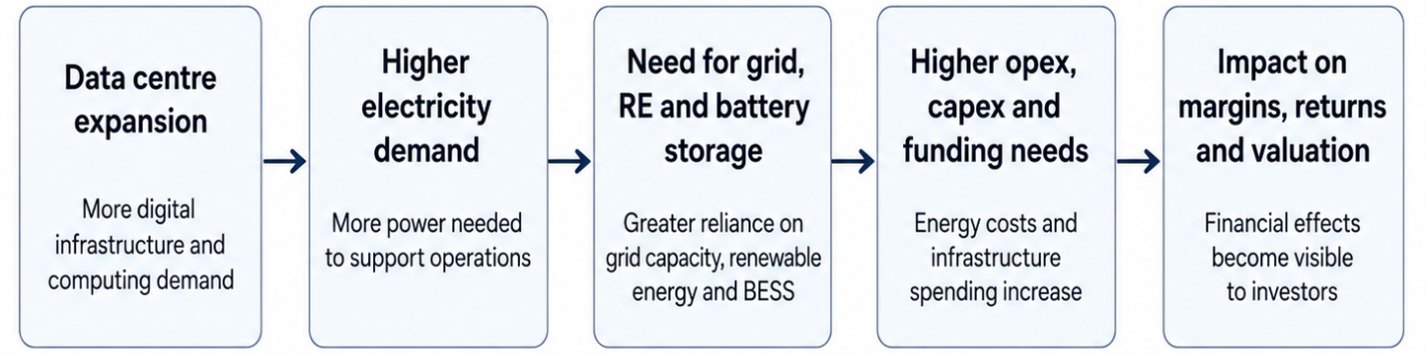
Exhibit 2: How Data Centre Growth Becomes an ESG Risk
Source: PCM, 16 June 2026
Exhibit 2 shows how data centre growth moves from an ESG issue into financial impact. Higher electricity demand increases the need for grid capacity, renewable energy and battery storage. These requirements may raise operating costs, capital spending and funding needs, which then affect margins, project returns and valuation. This is why ESG analysis should not stop at whether a company has a sustainability policy. The focus should be on how ESG-related issues affect earnings, capex and competitiveness.
The investor questions highlighted in Exhibit 2 demonstrate how ESG considerations are becoming a practical tool for investment analysis rather than a broad sustainability concept. Investors are increasingly focused on whether data centres can secure reliable and renewable power sources, manage water consumption and local resource pressures responsibly, and address the financial implications of supporting energy infrastructure. Key concerns include who will fund battery storage systems and grid upgrades, and whether rising energy costs can be passed on to customers without affecting competitiveness. These questions help investors evaluate long-term operational and financial risks, reinforcing the idea that data centres are not only critical digital infrastructure but also a significant test of how successfully the energy transition can be managed.
Disclaimer
The information contained herein does not constitute an offer, invitation, or solicitation to invest in any product or service offered by Phillip Capital Management Sdn Bhd (“PCM”). No part of this document may be reproduced or circulated without prior written consent from PCM. This is not a unit trust or collective investment scheme and is not an obligation of, deposit in, or guaranteed by PCM. All investments carry risks, including the potential loss of principal.
Performance figures presented may reflect model portfolios and may differ from actual client accounts’ performance. Variations in individual clients’ portfolios against model portfolios and between one client’s portfolio to another can arise due to multiple factors, including (but not limited to) higher relative brokerage costs for smaller portfolios, timing of capital injections or withdrawals, timing of purchases and sales, and mandate change (e.g., Shariah vs. conventional). These differences may impact overall performance.
Past performance is not necessarily indicative of future returns. The value of investments may rise or fall, and returns are not guaranteed. PCM has not considered your investment objectives, financial situation, or particular needs. You are advised to consult a licensed financial adviser before making any investment decisions.
While all reasonable care has been taken to ensure the accuracy and completeness of the information contained herein, no representation or warranty is made, and no liability is accepted for any loss arising directly or indirectly from reliance on this material. This publication has not been reviewed by the Securities Commission Malaysia.